Packaging that sells the second purchase.
Most brands lose the customer the moment the product leaves the shelf. The pack can't take a reorder, can't ask for an email and can't collect a review. Tapline puts a QR code or NFC tag on the pack that opens a page doing all three. AI writes the page, the brand approves it, and every scan shows up on a dashboard. We designed it, built it and launched it at tapline.store.
NO SIGNUP FOR THE DEMO · SCAN THE PAGE YOU BUILD WITH YOUR OWN PHONE



Three moments where brands lose the customer.
Every product brand already pays for these moments. None of them produce a sale, an email or a review, because the packaging has no way to ask.
The bottle runs out
The customer wants more and has to go searching. Tapline: a reorder button on the pack, one scan from the store.
"How much do I use? Morning or night?"
The label is too small to explain, so the product disappoints. Tapline: a 30-second how-to, right where they're holding it.
3,000 samples at a market, zero emails
People loved it and walked away anonymous. Tapline: trade a discount for an email at the moment of delight.
Sell a sales result, not a tap.
Nobody buys NFC tags for their own sake. We positioned Tapline around the three things a brand owner already measures and wants more of.
Reorders
The primary button on every page goes to the brand's own store: Shopify product, Amazon listing or any URL. Repeat revenue without a marketplace in the middle.
Email signups
An audience the brand owns, captured while the product is in hand. Export it, or sync it to Klaviyo on the Scale plan.
Reviews and registrations
Ask for the review while it's being used, and register the purchase for warranty or proof of authenticity.
"Put a QR code on the pack today. Upgrade to NFC when the scans prove it pays."
Every step is designed to remove a reason to say no.
Real screens from the product. Each one does a sales job: get the brand in for free, show value in minutes, make the upgrade obvious.
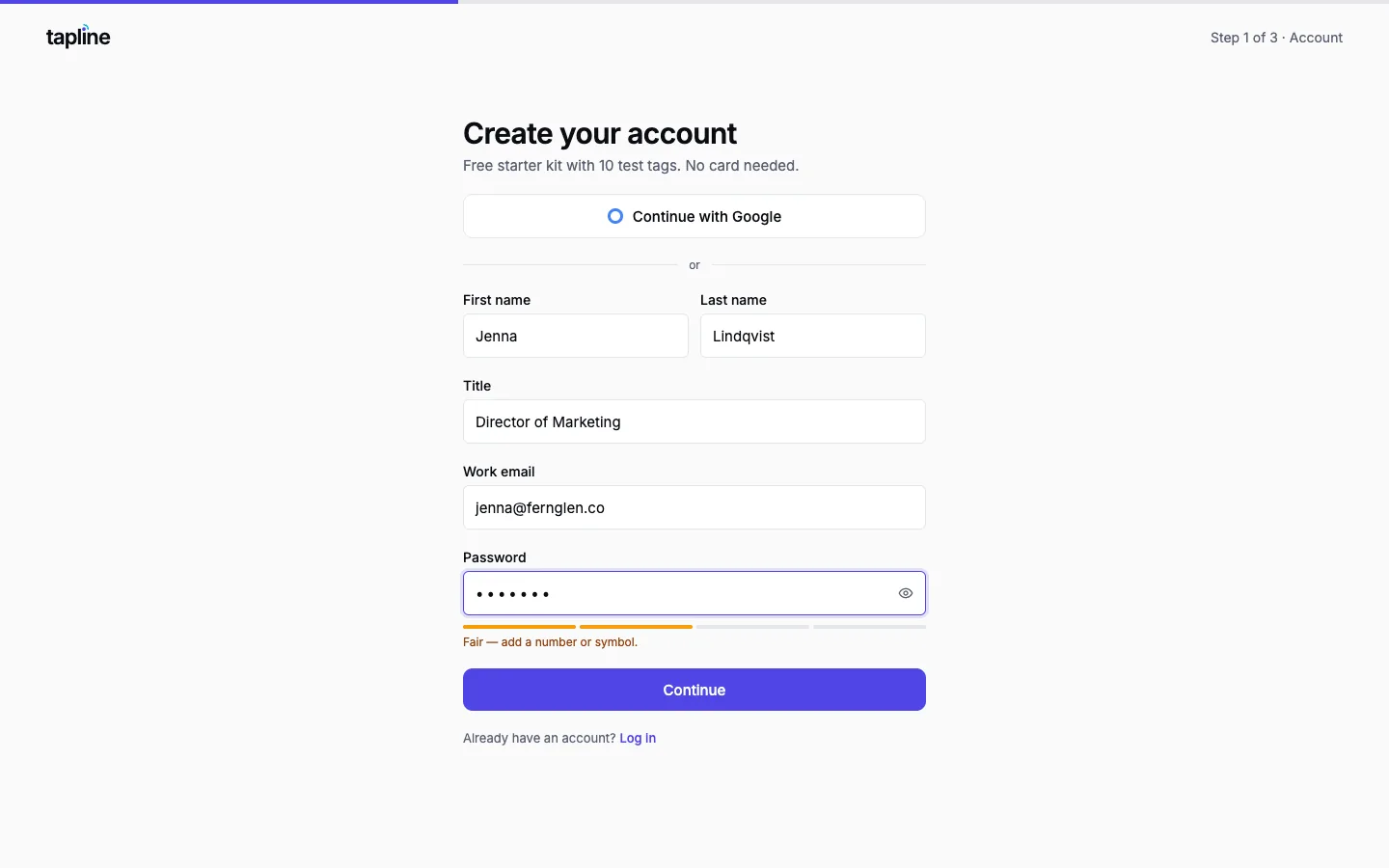
Sign up free. No card, no hardware.
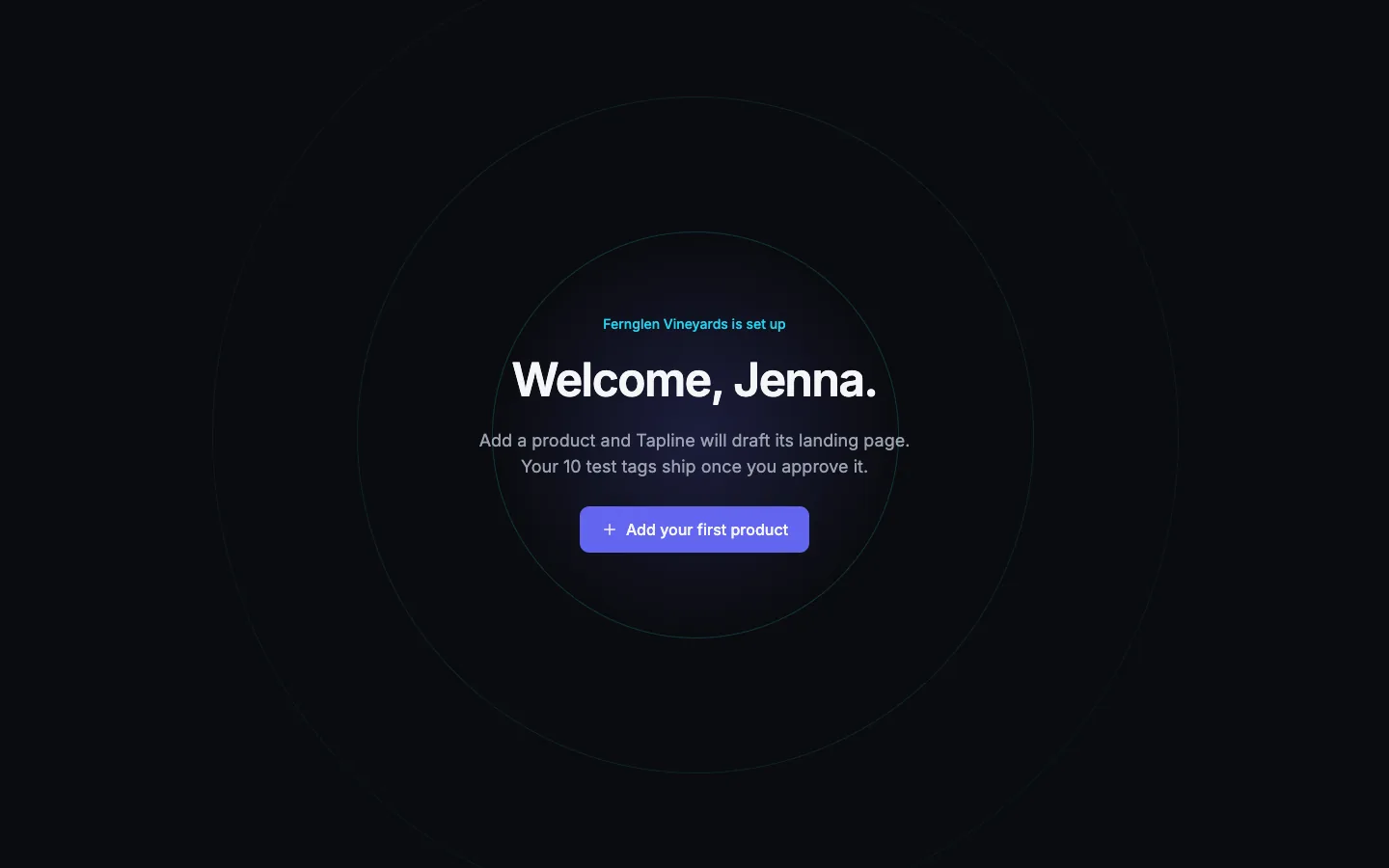
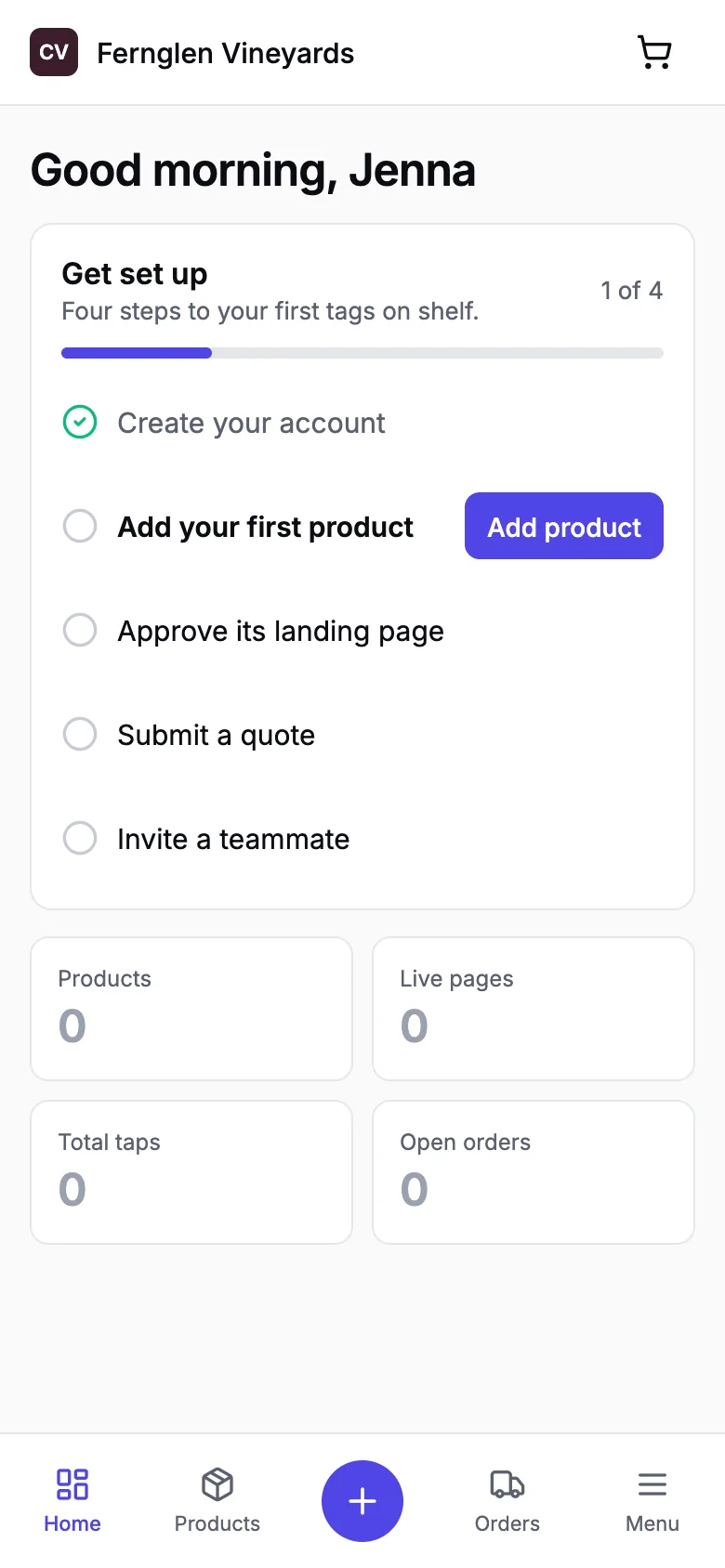
Google sign-in or email, three short steps, and a welcome checklist that walks the brand to its first live page.
Add the product. AI writes the page.
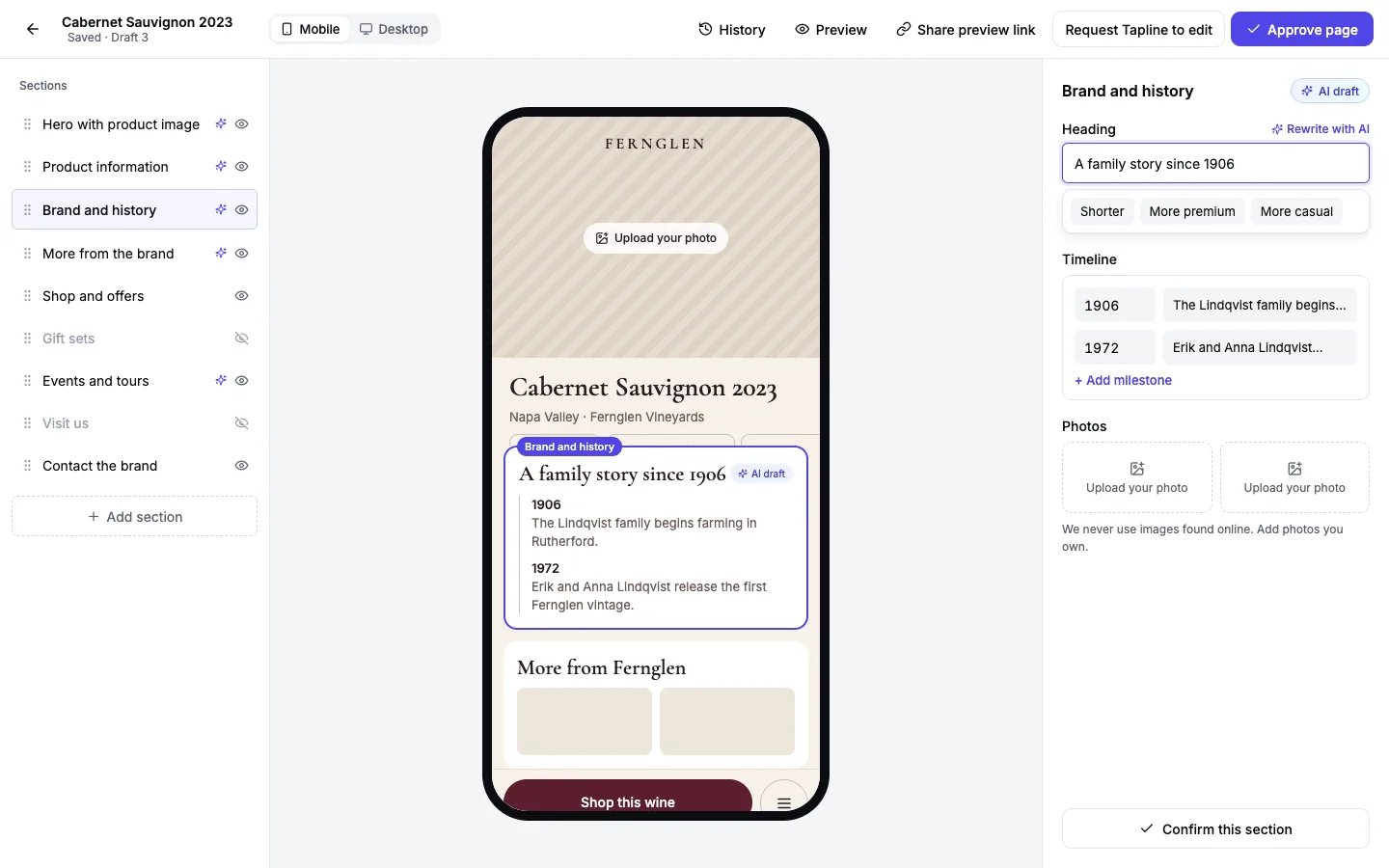
Name, photos and where shoppers should reorder. Claude researches the brand and drafts a full mobile page in about a minute. Every section is editable, with one-click rewrites and version history.
Publish. Print the QR today, add NFC later.
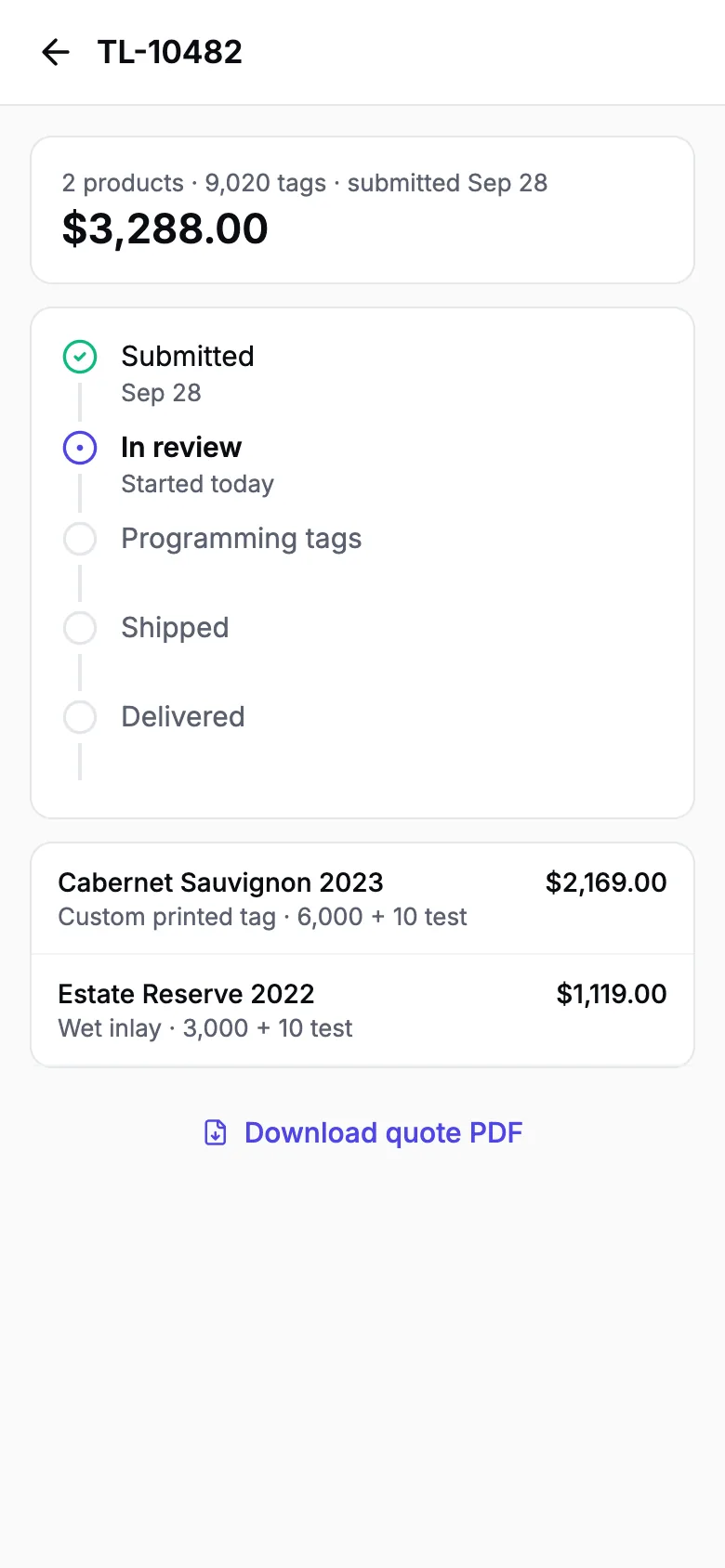
The QR code is free on every plan and never changes, even when the page does. Pre-programmed NFC tags are ordered from the same portal, quoted, programmed and shipped.
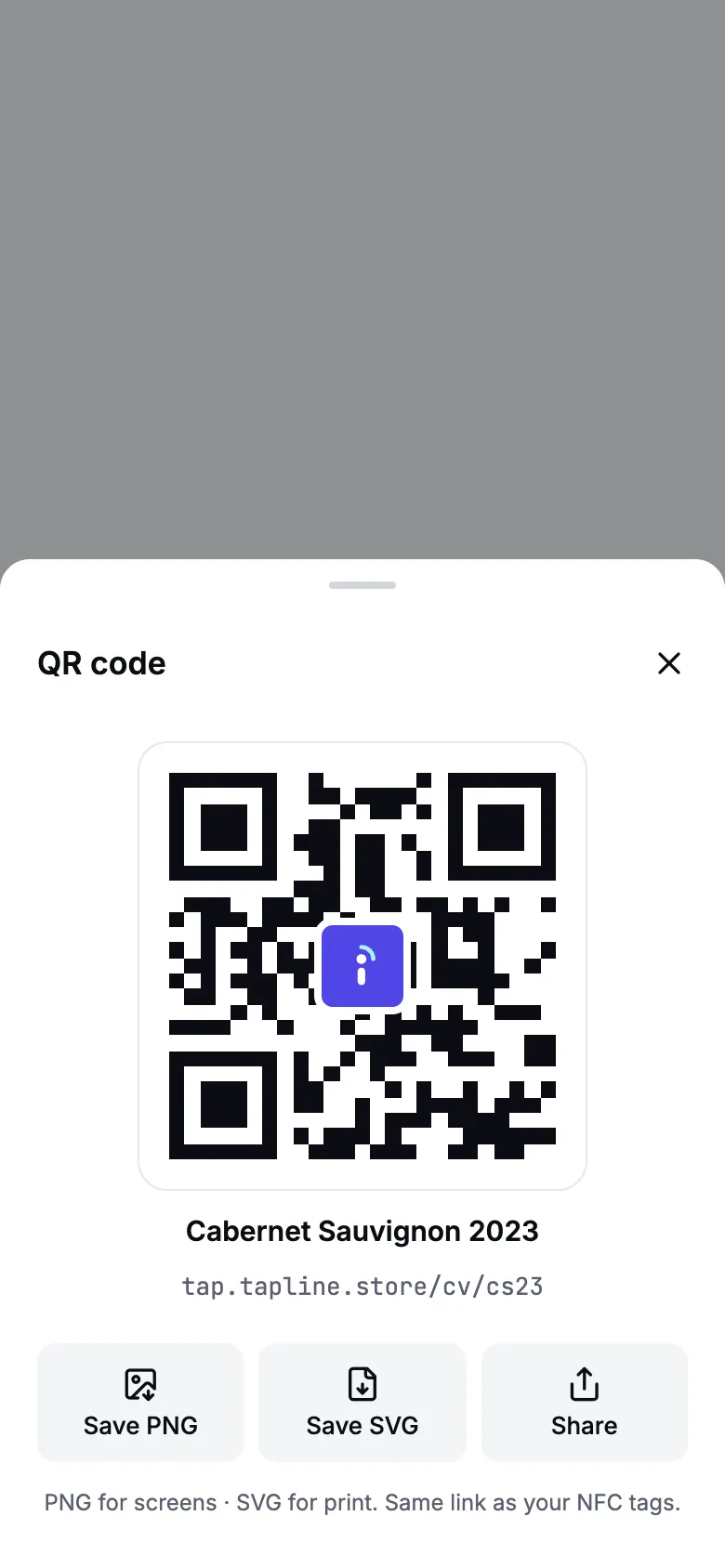
The shopper scans. The page sells.
No app, no login. Three templates fit the category: Elegant for wine and spirits, Clinical for beauty and health, Bold for apparel and drops. The reorder button stays pinned on every one.
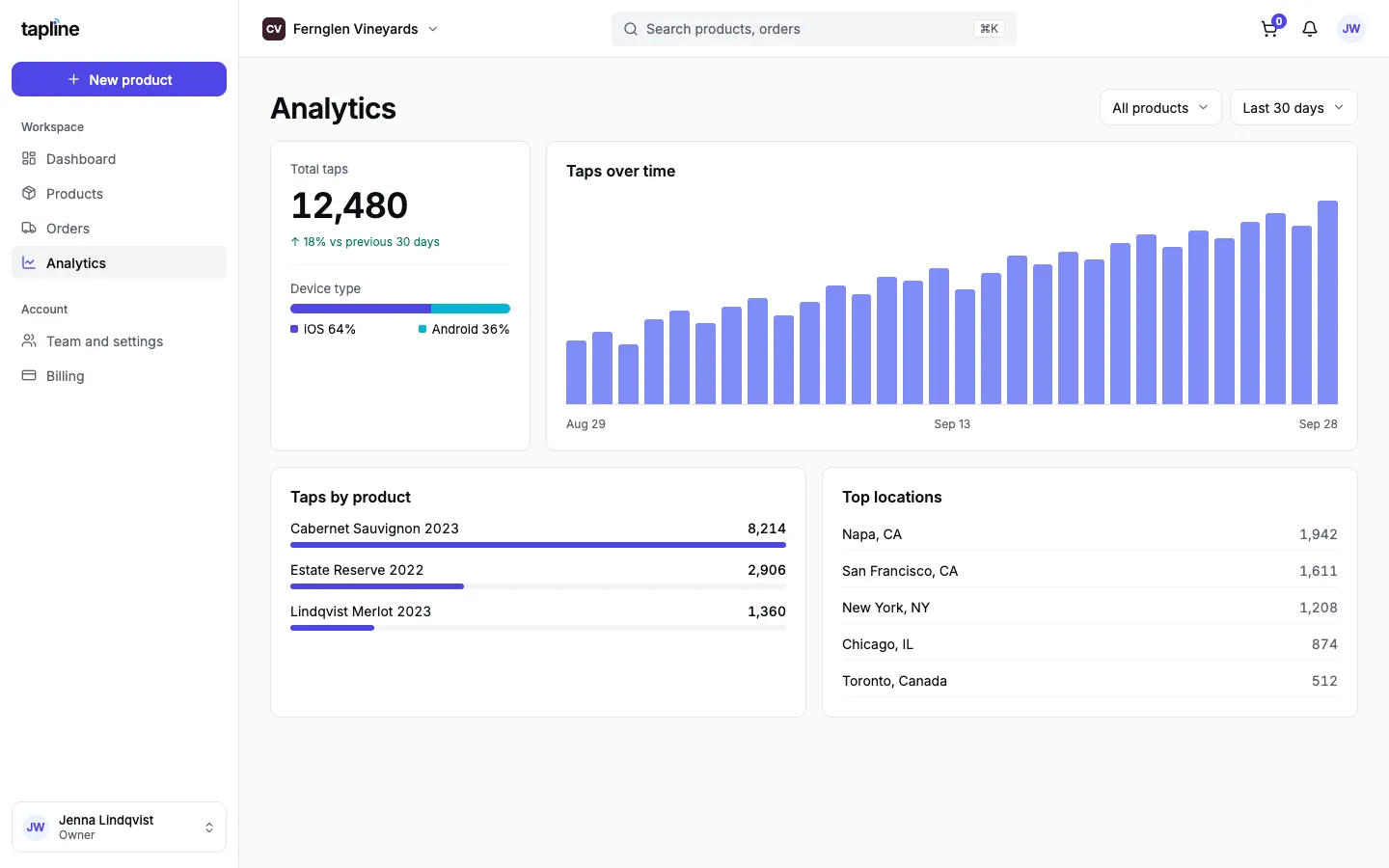
The dashboard makes the renewal argument.
Scans, repeat visits, locations and devices per product, refreshed nightly. The numbers the brand sees here are why it upgrades from 1 page to 10, and from QR to NFC.
Land free, expand on proof.
Priced per brand, not per product, so the first page is an easy yes and the second is cheaper than not having it.
- 1 product page
- QR code
- Email capture
- "Made with Tapline" badge
- 10 pages
- Full analytics
- Reorder button, email export
- No badge, NFC tags
- Unlimited pages
- Shopify + Klaviyo (early access)
- Languages, authenticity
- Team roles
- $0.35 for 1–500
- $0.28 for 501–5,000
- $0.20 for 5,001+
- Pre-programmed, min 25
Every free page carries a small "Made with Tapline" link. Each free brand puts Tapline in front of its own customers, many of whom run brands too. Paying removes the badge, which is one more reason to upgrade.
Run the whole thing from a phone.
Founders of small brands live on their phones, so the portal is also built as a Flutter app for iOS and Android on the same API. Products, AI pages, QR sharing, tag orders, analytics and team, with 88 mobile screens designed.
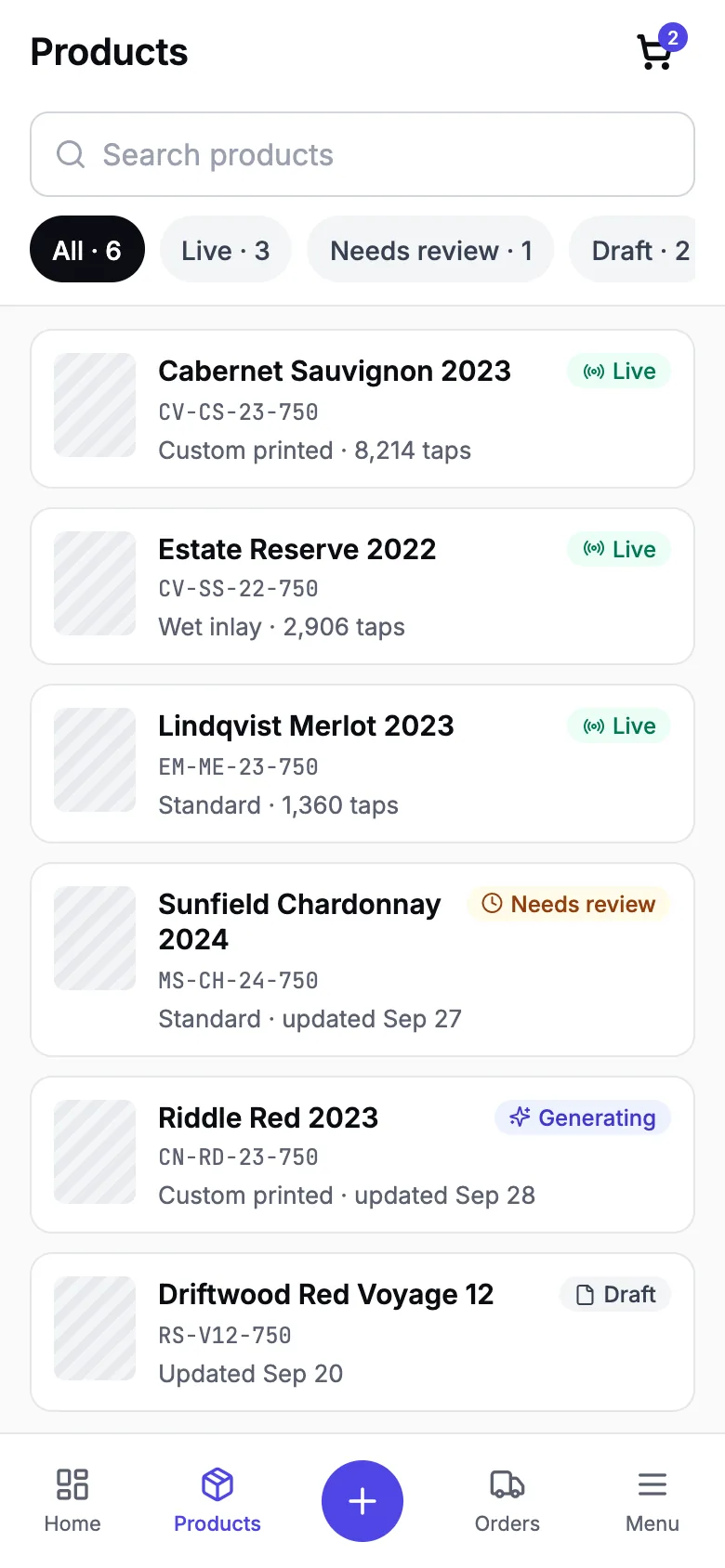
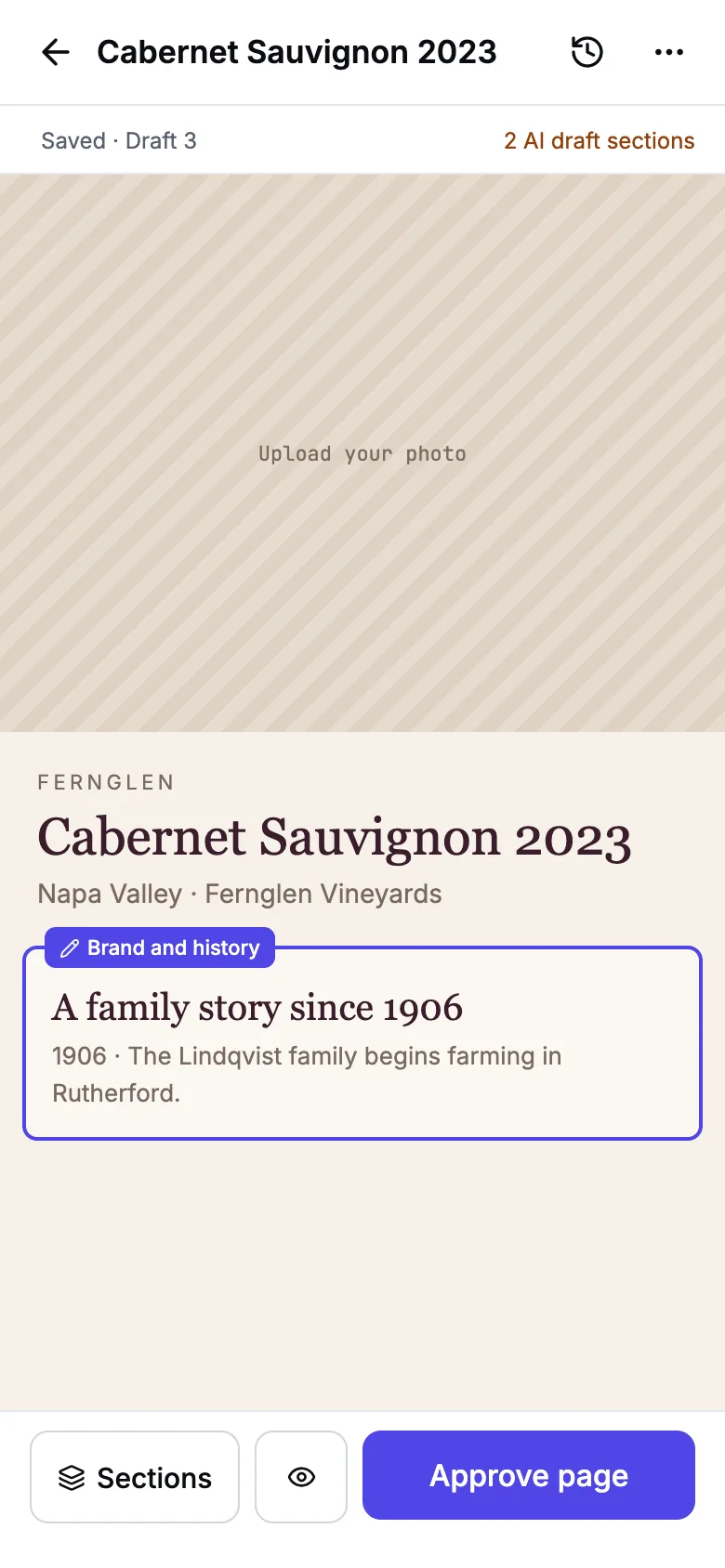
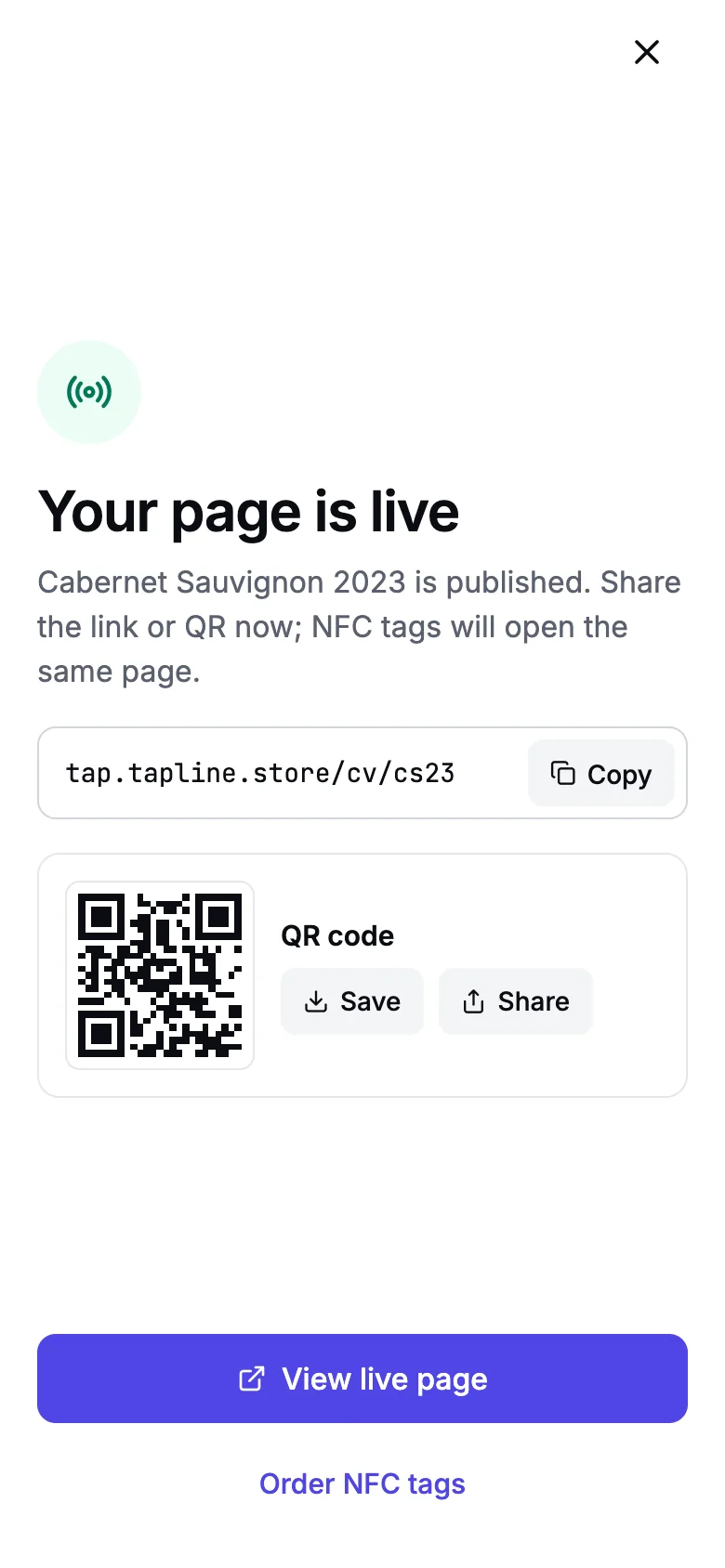
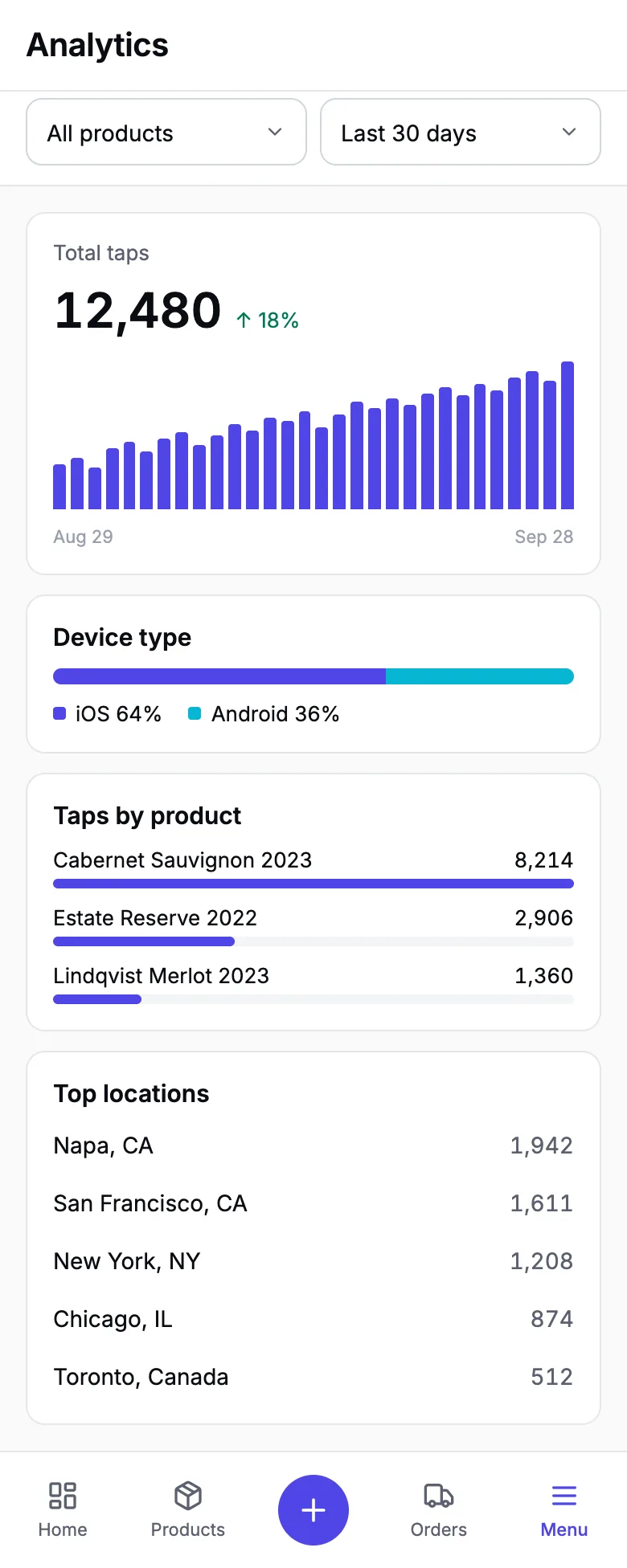
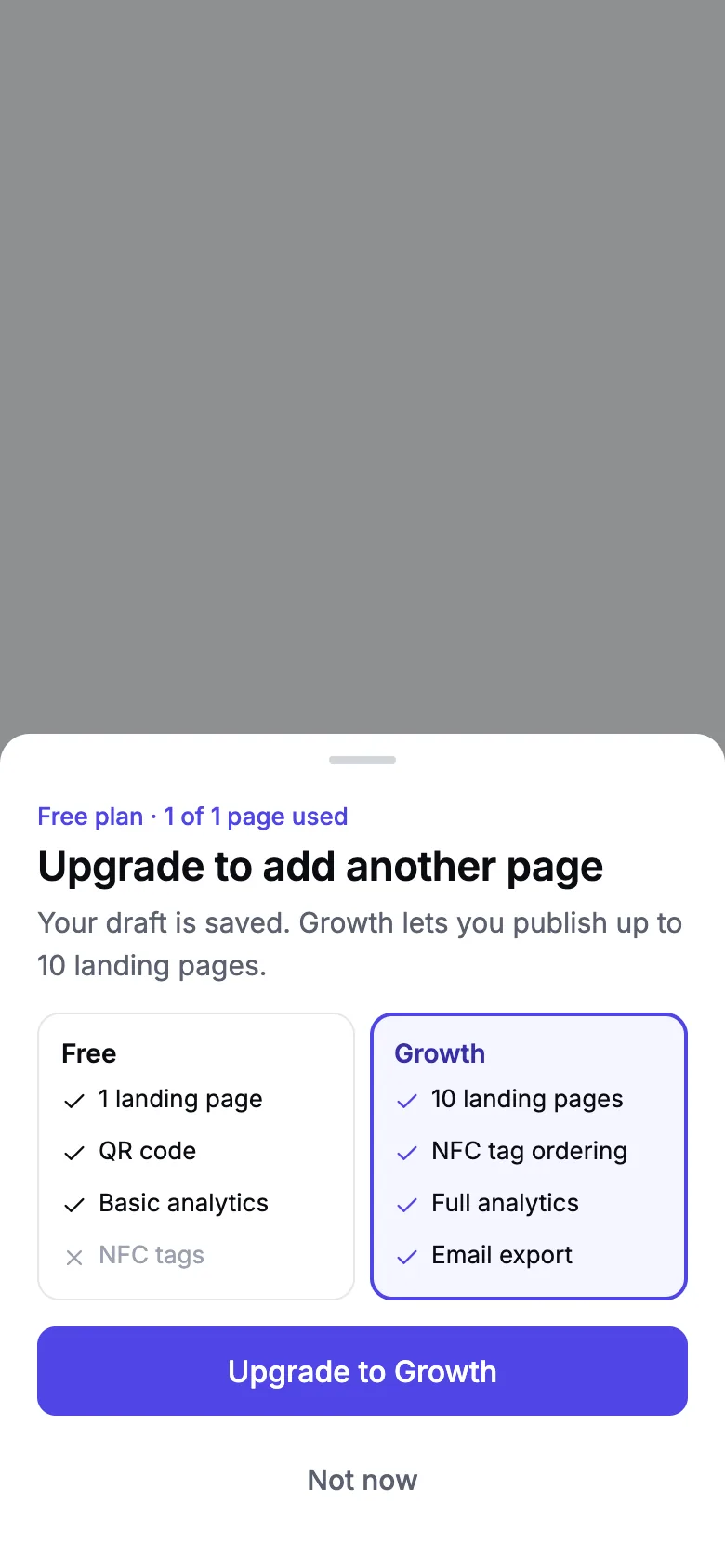
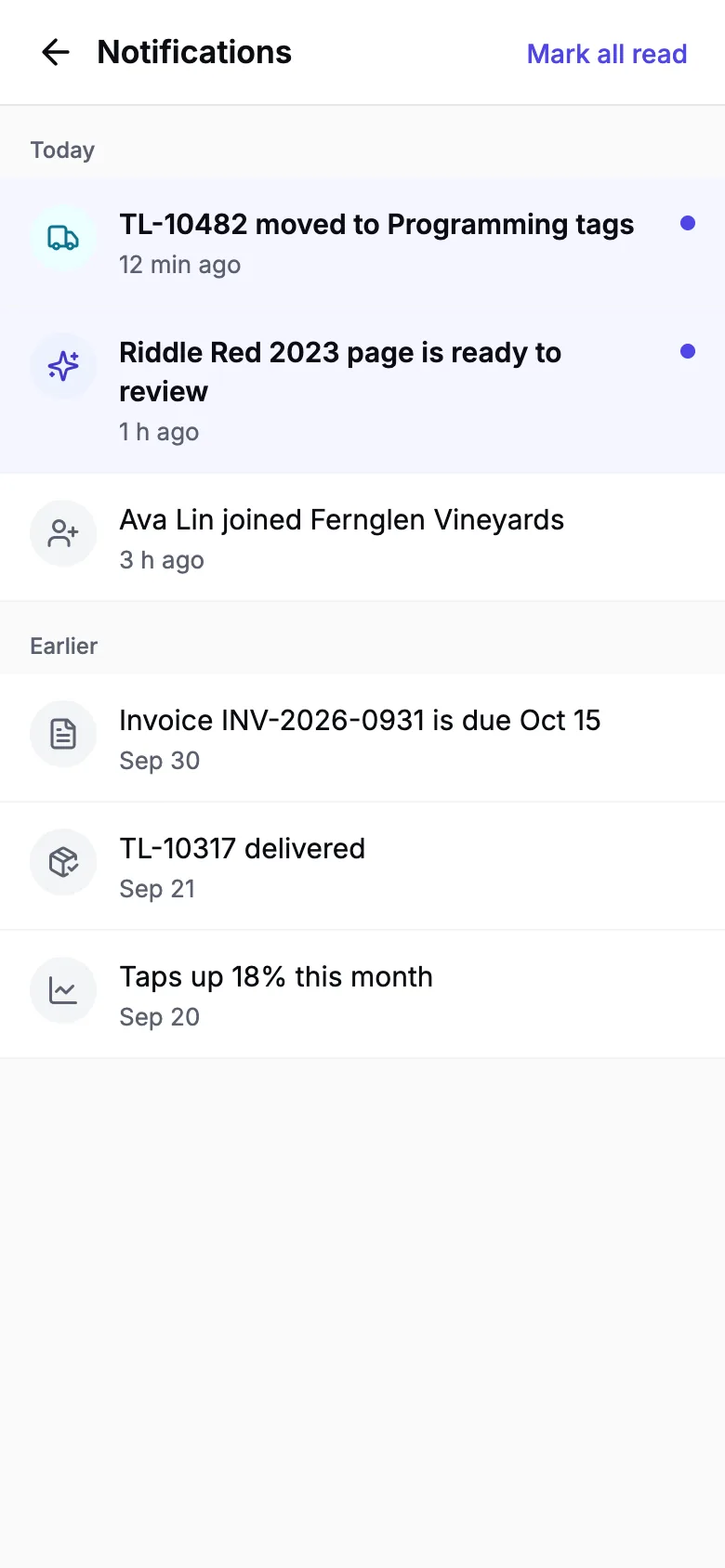
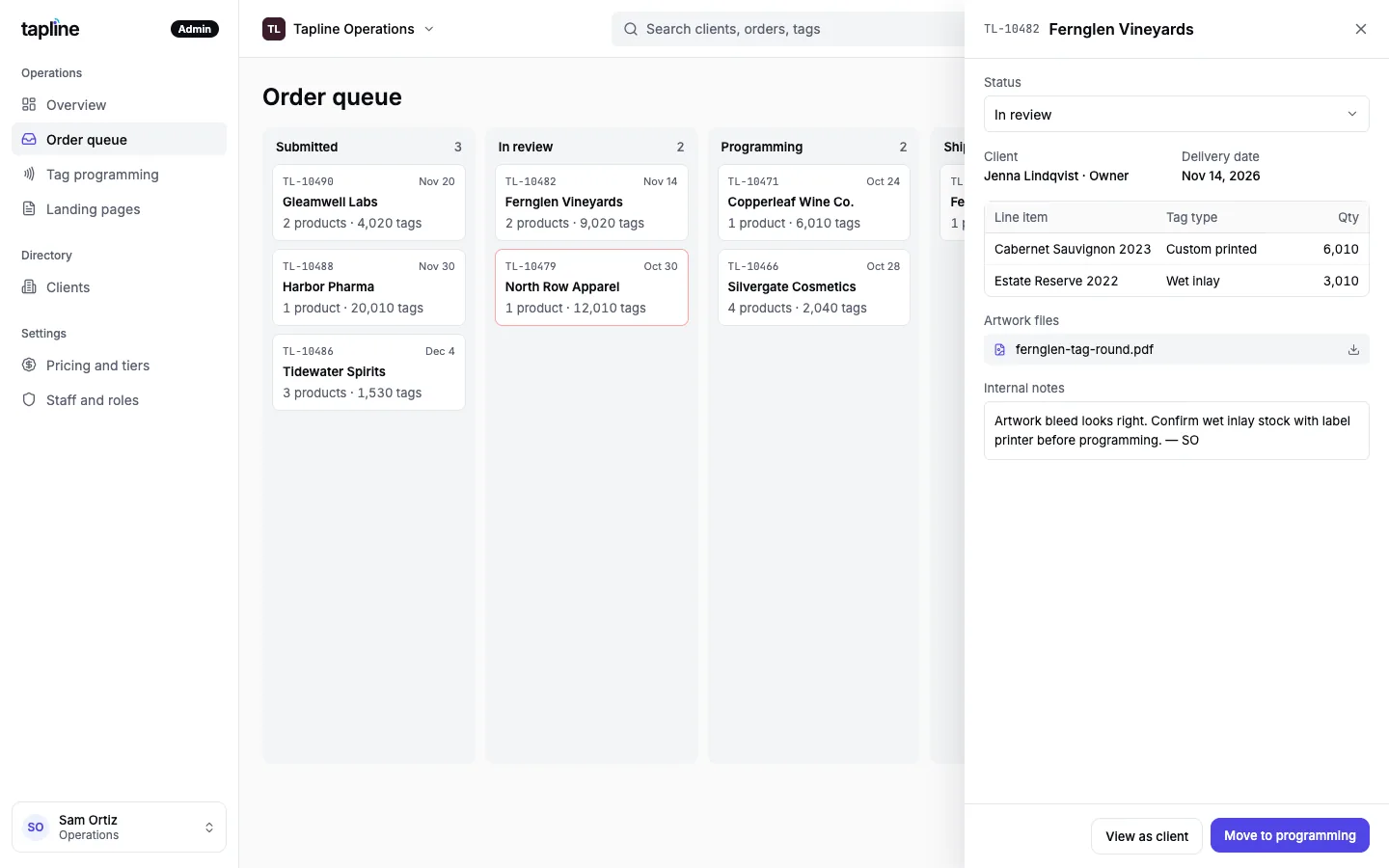
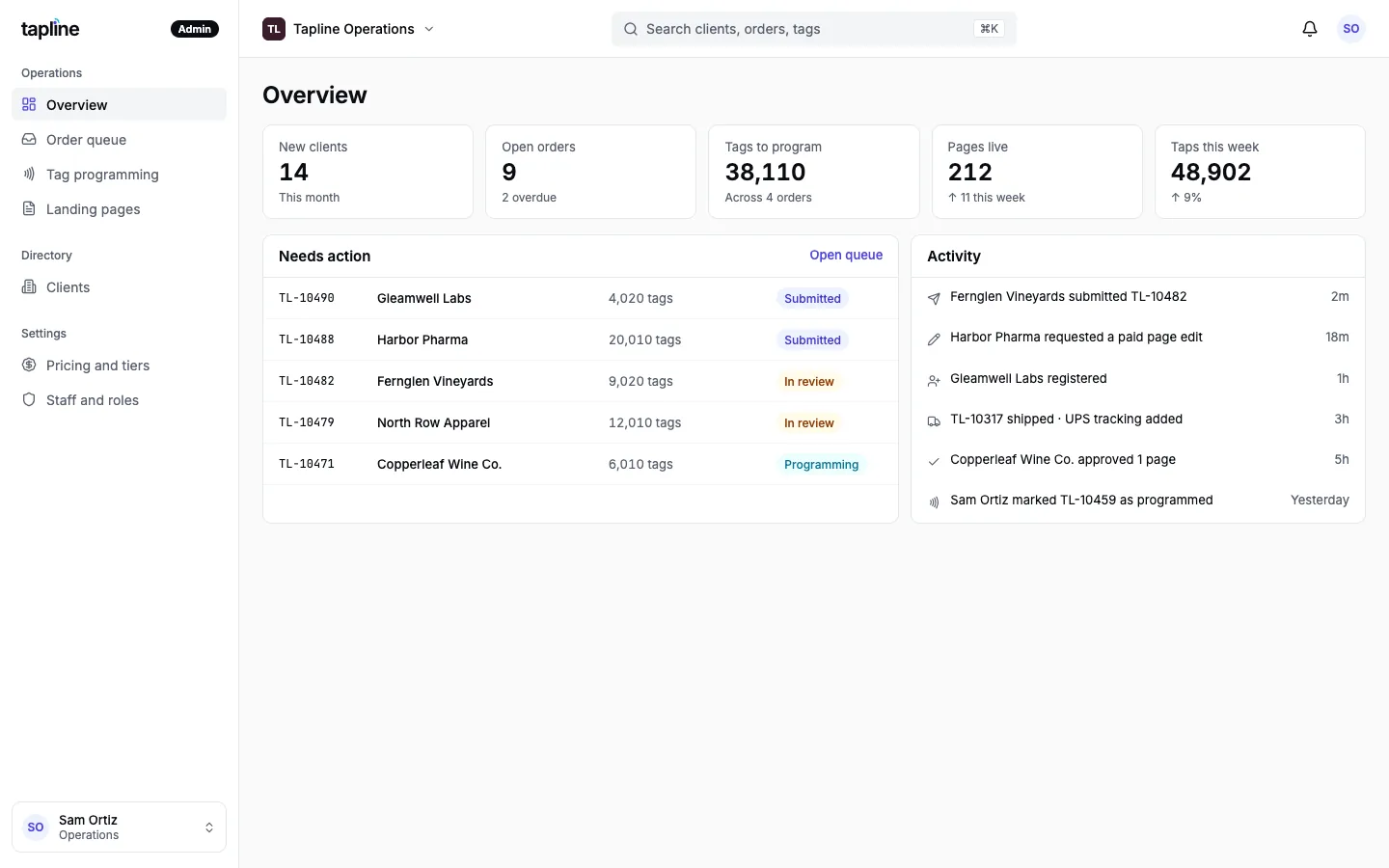
Ready to take an order on day one.
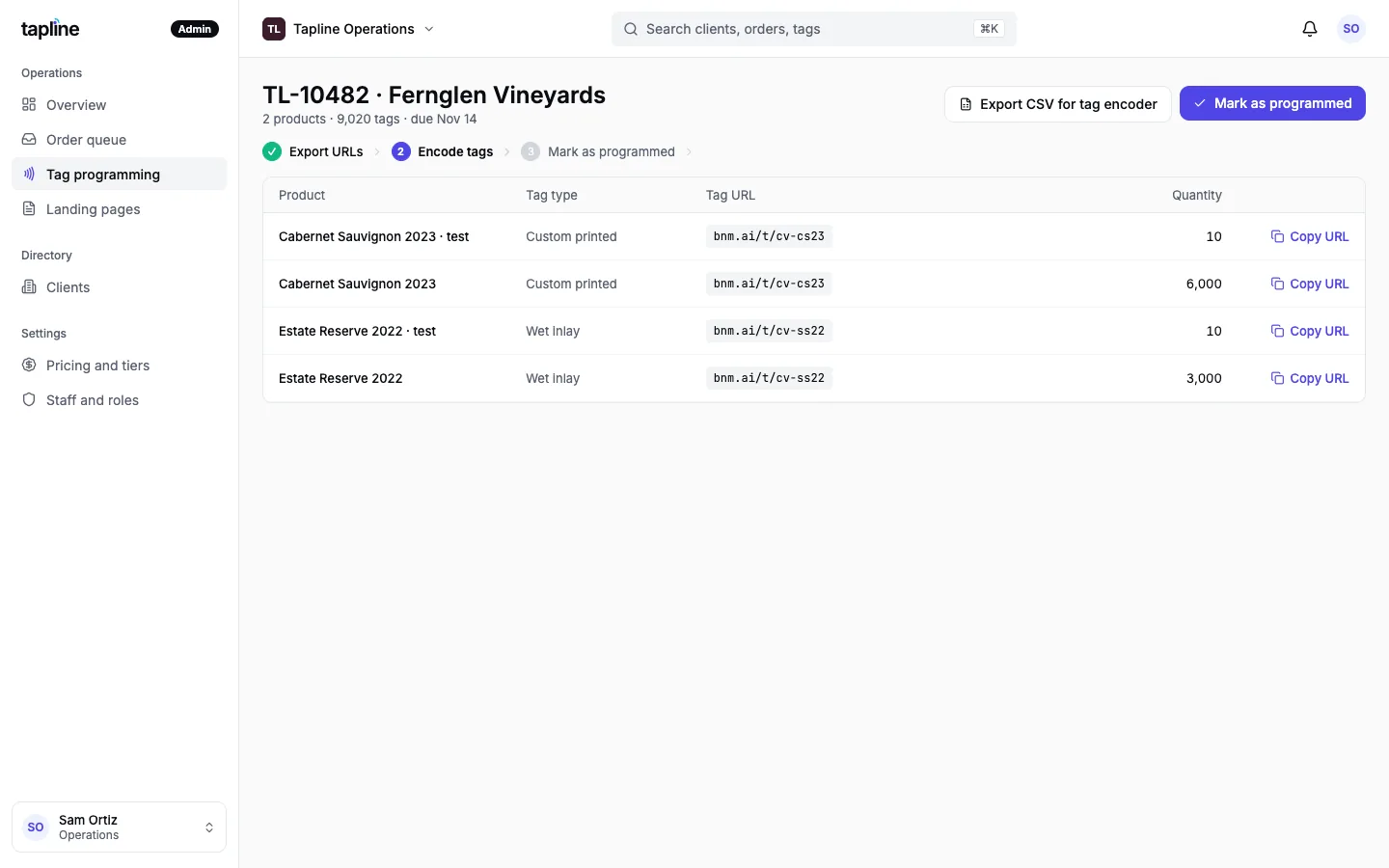
Selling physical tags means fulfilment. The staff admin covers the order queue, tag programming with CSV export, client accounts and page review, so the first paid order doesn't become a spreadsheet.
A launch campaign, not just a launch.
Five vertical spots for Instagram, TikTok and Shorts, each built on a moment the buyer has lived. They lead with the problem, never the tech.
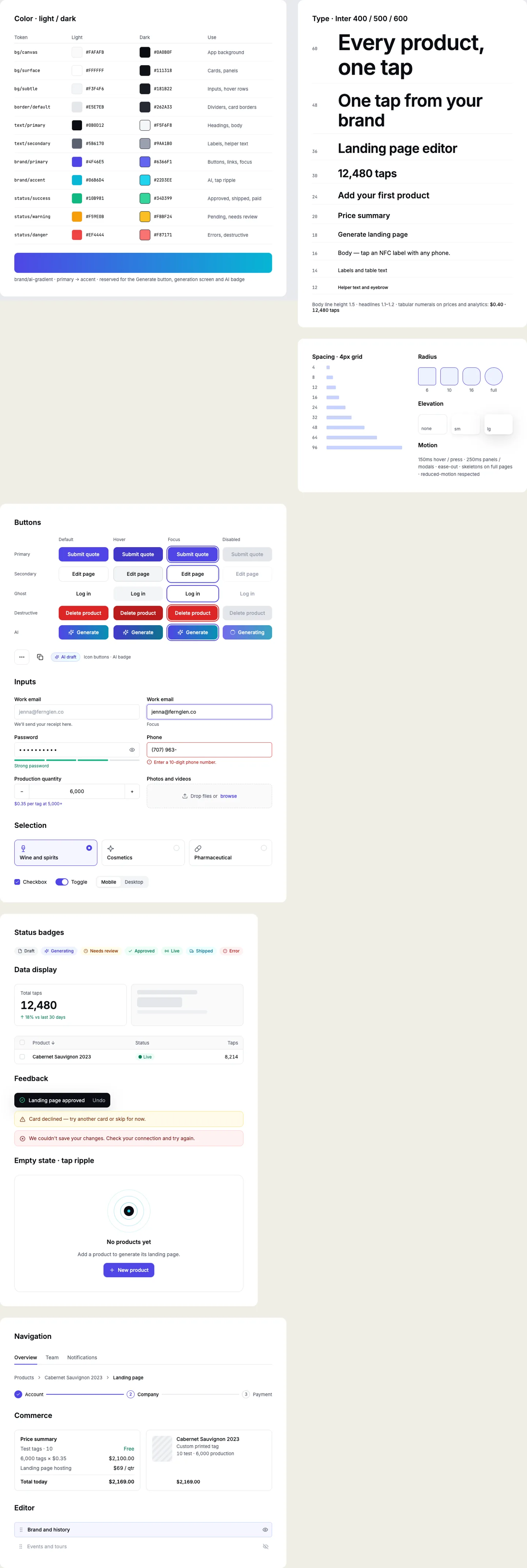
One design system, 124 screens.
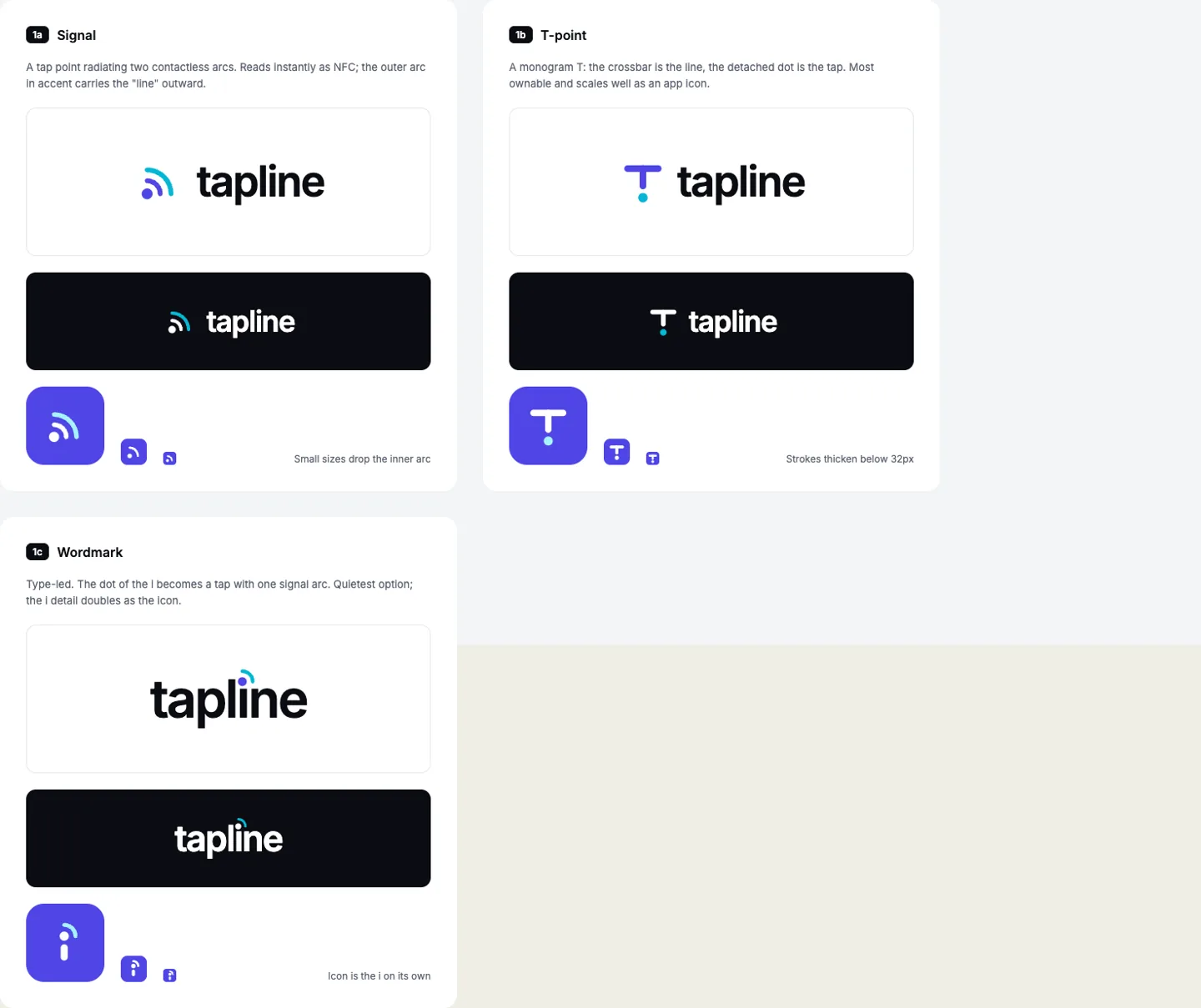
Tokens for colour, type, spacing and status, a wordmark with a tap-ripple dot over the i, and every state designed: empty, loading, error, offline, upgrade-gated. Engineers built from the system, not from guesses.
Production-grade from the first commit.
Multi-tenant, tested and deployed with staging and production as separate environments, so a demo never touches a real customer.
What brands ask before they say yes.
Do shoppers need an app?
No. Any phone camera reads the QR code, and every modern iPhone and Android reads NFC without an app. The page opens in the browser.
We already printed our packaging. Is it too late?
No. Print the QR on a sticker or a hang tag, or add NFC tags to existing stock. The code never changes, so you can update the page forever after.
Does it work with our store?
The reorder button links to any store URL: Shopify, WooCommerce, Amazon or your own checkout. Native Shopify and Klaviyo sync is on the Scale plan, in early access.
Who writes the page?
The AI writes a first draft from your product details. You edit anything and approve it. Nothing goes live without your approval, and the AI never uses images found online.
What does it cost to try?
Nothing. The free plan includes one page, a QR code and email capture. Upgrade to Growth at $29 a month when you want more pages, analytics and NFC.
Build a page. Scan it with your phone. In 60 seconds.
The interactive demo walks through the whole loop, from product to AI page to QR to dashboard, and you can open the page you build on your own phone.
Want a product like this built?
We take SaaS ideas from design to paying customers: product, AI, payments, mobile and launch.
Book a call with Esipick